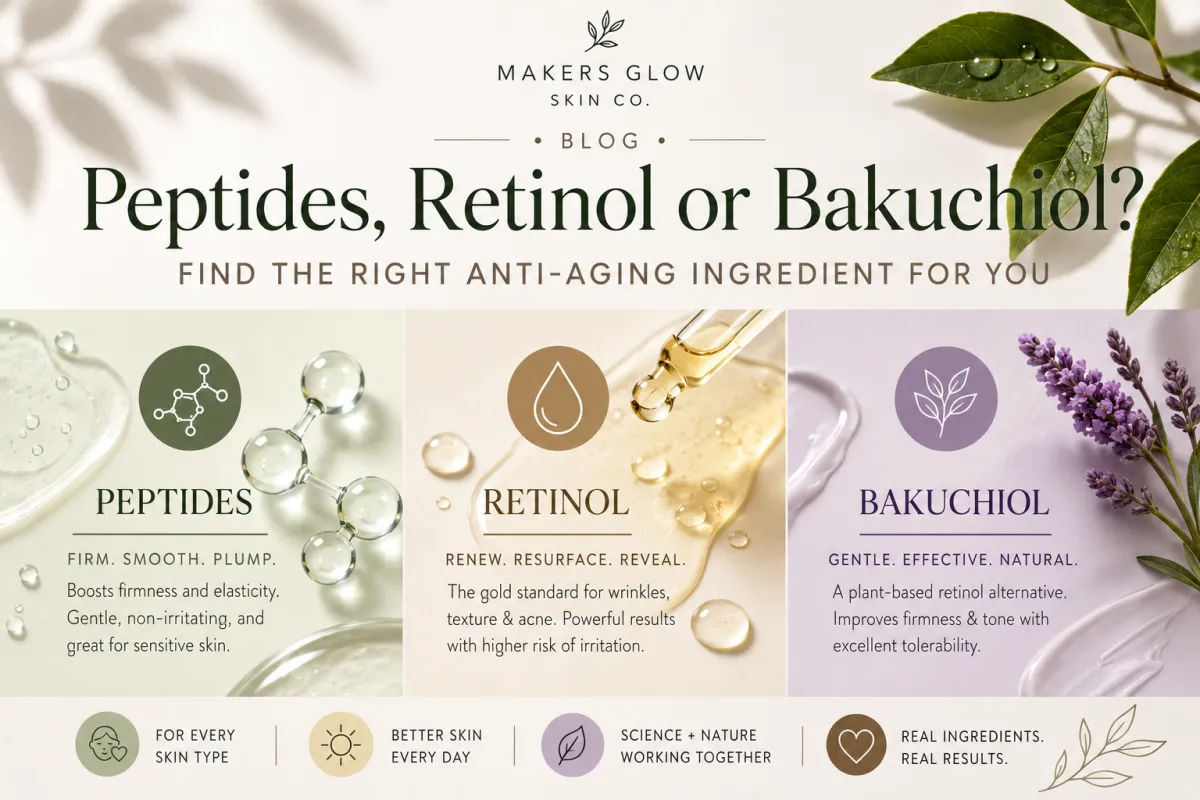
Peptides vs. Retinol vs. Bakuchiol: The Anti-Aging Line-Up
When it comes to choosing the best anti-aging skincare ingredients, peptides, retinol, and bakuchiol regularly top the list. Each offers unique benefits in the quest for firmer, smoother, and more youthful-looking skin. But what sets them apart, and how do you know which is right for your routine? Let's break down what makes each ingredient special, how they compare, and who they work best for - so you can tailor your anti-aging arsenal with confidence.
1. Peptides: The Firmness-Boosting Messengers
Peptides are small chains of amino acids that act as "messengers" in the skin, signaling your cells to perform essential repair functions. In skincare, peptides support firmness and elasticity, helping to soften the look of fine lines and deliver a plumper, smoother complexion. Unlike retinol, peptides are non-irritating for most skin types, making them a standout option for sensitive or reactive skin. They're widely used in anti-aging creams and serums aimed at mature skin, and they're a popular choice for anyone looking for visible skin-tightening and firming results. Peptides can be used both morning and night and pair safely with other active ingredients - making them versatile building blocks for your skincare routine.
2. Retinol: The Gold-Standard Age Fighter
Retinol, a derivative of vitamin A, is often seen as the gold standard in anti-aging skincare. It's lauded for its ability to stimulate collagen production, speed up cell turnover, and visibly smooth wrinkles, fine lines, and skin texture. Studies continue to show the effectiveness of retinol for treating both acne and signs of aging, earning it a reputation as a do-it-all powerhouse. However, retinol can cause side effects such as dryness, redness, and peeling, especially for new users or those with sensitive skin. It's smart to start slow - perhaps using it just a couple of nights a week - and always pair it with sunscreen since it makes skin more sun-sensitive. Its powerful anti-aging results are well established, as is the importance of learning how to use it for your unique skin needs.
3. Bakuchiol: The Gentle Retinol Alternative
Bakuchiol, a plant-derived compound found in the seeds of the Psoralea corylifolia plant, is frequently billed as the natural and gentle alternative to retinol. While not structurally related to vitamin A, it produces similar anti-aging benefits: increasing cell turnover, improving firmness, and reducing the look of fine lines and hyperpigmentation. However, bakuchiol shines for its excellent tolerability and low risk of irritation - making it especially popular among those with sensitive skin or anyone turned off by retinol's side effects. It has become especially popular among people comparing bakuchiol to retinol and those seeking an effective, gentle, evidence-backed option for sensitive skin. Bakuchiol is also safe for use during pregnancy, an added bonus for expectant parents seeking anti-aging results without risk.
4. How Do You Choose?
- For sensitive or reactive skin: Peptides and bakuchiol are generally much better-tolerated than retinol.
- For fast, visible results (especially for wrinkles or acne): Retinol may deliver the most dramatic improvements - but with a greater risk of irritation.
- If you want to layer or combine ingredients: Peptides play well with both retinol and bakuchiol, and using them together can enhance overall benefits.
- Interested in natural alternatives: Bakuchiol offers a plant-based approach, with clinically-demonstrated anti-aging efficacy and gentler results.
5. Can You Combine Them?
Yes! Many modern anti-aging routines feature both peptides and retinol (or bakuchiol) for a synergy of benefits. Using peptides in the morning and retinol at night is a popular approach, or alternating days between bakuchiol and retinol if your skin can tolerate both. Always patch test new products, introduce actives gradually, and consult with your dermatologist if you're unsure how to layer or combine these powerhouse ingredients.
Conclusion
When it comes to fighting visible signs of aging, there's no one-size-fits-all answer. Peptides, retinol, and bakuchiol each bring something valuable to the table - whether you seek firmness, wrinkle reduction, or gentle rejuvenation. By understanding how each works (and listening to your skin's needs), you can build an anti-aging routine that delivers real, lasting results. Have you tried any of these ingredients in your skincare routine? Share your experiences or questions in the comments, and let's tackle healthy, youthful skin together!
